
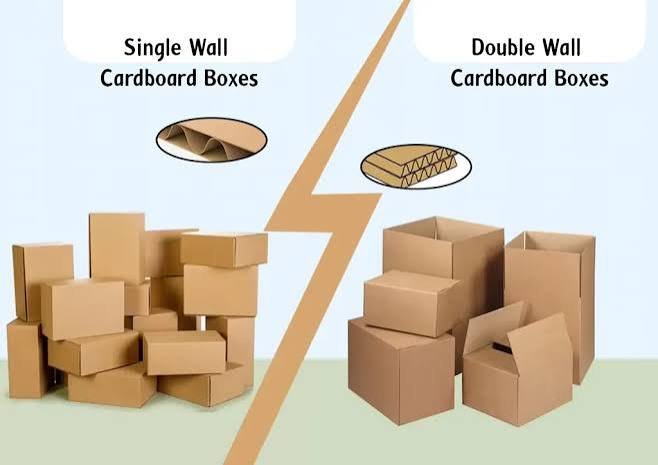
Are you not sure between single wall or double-wall corrugated boxes you should use? The difference is based on the degree of protection that your shipment requires. Single-wall boxes are suitable for regular deliveries, and double-wall boxes provide additional protection for heavier items and challenging shipping environments. But is it worth the increased cost for extra strength? Let's weigh the options and make a final decision that will save you from overspending by using the correct box.
What are Single Wall Corrugated Boxes?
Single wall corrugated boxes consist of three layers of paper, two flat linerboards between which is a corrugated layer of paper, or flute. The combination of strength, cushioning, and low cost makes this structure an excellent choice. Because they're easy to store and lightweight, these boxes are popular for shipping retail products and ecommerce orders. Best suited for: Clothing, books, cosmetics, accessories, packaged food products, and small household items. In many instances, single wall construction is adequate for relatively light products when the products are properly packed and not subjected to excessive stacking pressure.
What are Double Wall Corrugated Boxes?
Double wall corrugated boxes consist of five major layers of paper: three linerboards and two fluted layers. The extra layer makes for a thicker construction, which typically offers greater compression and puncture resistance and better handling. A lot of times these boxes are utilized for products that are heavier or require additional support when shipping them and storing them within the warehouse. Best suited for: Electronics, glassware, tools, industrial components, bulk goods, and fragile goods that need extra-protection packaging.
Double-wall construction doesn't always mean damage-free delivery. The correct size of the box, appropriate cushioning, and appropriate board specification still remain important.
Single-Wall vs Double-Wall Corrugated Boxes: Key Differences
|
Feature |
Single-Wall Boxes |
Double-Wall Boxes |
|
Construction |
1 fluted layer and 2 liners |
2 fluted layers and 3 liners |
|
Overall structure |
Usually thinner and lighter |
Usually thicker and more rigid |
|
Compression resistance |
Suitable for many standard shipments |
Generally better for demanding loads |
|
Puncture resistance |
Suitable for ordinary handling |
Generally offers greater resistance |
|
Product suitability |
Lightweight to medium-duty applications |
Medium-duty to heavy-duty applications |
|
Packaging cost |
Usually lower |
Usually higher |
|
Shipping weight |
Adds less packaging weight |
Adds more packaging weight |
|
Storage |
Requires less space per flat box in many cases |
May require more space |
|
Common applications |
Ecommerce, retail, apparel |
Industrial goods, bulk shipping, fragile products |
Which of These Corrugated Boxes is Stronger?
Double wall corrugated boxes are usually stronger than single wall boxes of the same dimensions and contain a second fluted layer and linerboard. This extra structure can enhance the ability of boxes to resist compression and stop damage from warehouse stacking or harsher handling. But strength isn't all about the number of walls. Performance is affected by paper quality, flute profile, box dimensions, and loading of the package.
If you are shipping heavier items or stacking items in cartons on pallets, consider checking the box's Edge Crush Test (ECT) value and compression needs, rather than thickness. The guidance of ASTM International also stresses the need to select corrugated materials based on the actual distribution and performance needs.
When Should One Use Single-Wall Boxes?
If you don't have an excess of packaging material or shipping weight, single-wall boxes will be the ideal choice for assured protection. Single wall construction may be considered if you ship:
-
Clothing, footwear, books and accessories.
-
Packaged retail products, such as cosmetics and candles.
-
Lightweight ecommerce orders with suitable internal protection.
-
Products which are not subjected to severe stacking or handling requirements.
Single-wall corrugated boxes are also a convenient surface for printed logos, product information, and custom artwork in branded packaging solutions.
When to Use Double-Wall Boxes?
If the risk of packaging failure is greater, or the shipping environment is more challenging, double-wall boxes are an option to consider. They generally can be used for:
-
More dense products that require more box rigidity.
-
Delicate items which need extra support to keep in shape.
-
Shipping with several cartons or pallets stacked on top of each other.
-
Longer distribution lines with multiple handling.
-
Products that have sharp edges which might puncture weaker packaging.
For heavy or fragile products, use a suitable grade of box in conjunction with protective inserts, padding, and secure closure.
What is the Cost of Single Wall Vs. Double Wall Boxes?
|
Cost Factor |
Single-Wall Boxes |
Double-Wall Boxes |
|
Material usage |
Lower |
Higher |
|
Typical unit price |
More economical |
Usually more expensive |
|
Shipping weight |
Generally lower |
Generally higher |
|
Protection for demanding shipments |
Depends on board grade |
Often better suited |
|
Best cost-saving approach |
Use for suitable everyday shipments |
Reserve for products needing extra strength |
Steps for Selecting the Perfect Box for Your Product
Use the product, not the thickness of the packaging. Take into account its weight, breakability, size, and the way it will be delivered to the customer from your site.
1. Check weight and shape of the product. Heavy or irregularly shaped items may require stronger board and additional internal support.
2. Take into account the shipping environment. Different packaging needs are required with parcel delivery, warehouse stacking, palletized freight, and long-distance deliveries.
3. Choose a suitable grade for the board. Inquire with your packaging supplier about the ratings you need, flute combinations, and compressions. Test the suggested box in challenging shipping conditions.
4. Consider internal protection. Prevents movement and impact damage with dividers, inserts, cushioning, and box fit.
5. Review the complete cost. Go through the costs of materials versus shipping weight, storage, and the possibility of damaged products.
Can You Print on a Single Wall and Double Wall Corrugated Box?
Yes. Custom printed packaging can be done with both kinds of constructions. Which printing method to use depends on the surface of the board, the artwork, order quantity, and purpose. At Box Printing Hub, businesses can explore custom box printing options based on their product, packaging dimensions, and branding requirements.
Common Errors to Avoid
When selecting packaging, it's important to avoid the following mistakes:
-
Not using the proper box for the product that is due to be transported.
-
Paying for a double wall if a single wall only is needed and properly specified.
-
Neglecting pressure from stacking and transportation.
-
Letting too much space between products for movement during transport.
-
Assuming that all double wall boxes work better than all single wall boxes (even if the materials are not the same).
The goal is to select packaging that provides product protection while not being unnecessarily costly.
Conclusion
Single-wall corrugated boxes are a versatile and cost-effective packaging material that can be used in a wide variety of applications. Double-wall corrugated boxes are generally utilized for heavier products, more challenging handling, and shipments that need more stacking strength. The ideal answer would be the one that will offer you the maximum amount of protection for your product and shipping route. Research board quality, box size, inside cushioning, and overall shipping fees. Looking for packaging that will be both strong and perfect for your brand? Visit Box Printing Hub to learn about custom box printing and discover the perfect packaging solution for your business.